 The Occasional Orchestra Learn About Everything Music!
Related Articles

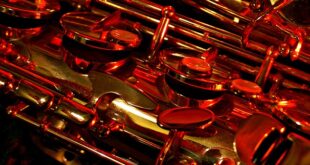
If you’re a fan of jazz music, or have been an internet user chances are you’ve seen one or two or maybe a few. The saxophone is a J-shaped single-reed woodwind instrument with a conical body that is generally constructed of brass. Sound is created, like with all single-reed instruments, when a reed on a mouthpiece vibrates, creating a sound wave inside the instrument’s body.
The saxophone is a great instrument to play and is highly regarded among woodwind instruments. Someone who plays the saxophone is typically viewed as intelligent and passionate, which is a suitable picture for such an outstanding instrument. There are nine distinct varieties of saxophones available, with the most common being alto, soprano, baritone, and tenor. The saxophone’s smooth and soothing tone makes it one of the greatest instruments for usage in genres such as jazz, soul, blues, and, of course, classical.
Which saxophone should I play?
Generally speaking, most new saxophone students start off learning on either the alto or tenor. They are the easiest. The soprano and baritone saxophones have a few more issues that a beginner will face.
Although the soprano is smaller than the others, it is very difficult to play in tune. At least for the first little while. The baritone is very big and so will require more air. The intonation will be more difficult as well.
Having said that, I would encourage any beginner to start on the one they love the sound of the most. If you like them all the same, start on the alto!
Table of Contents
How much do they cost?
Beginner saxophones typically cost between £600 to £2000. Intermediate or step-up saxophones typically cost £1500 to £2200, whereas entry level pro saxophones (which are still mostly used by advanced students) cost £2200 and above.
Why are saxophones expensive?
Making a truly sturdy horn takes significant amounts of materials and craftsmanship. Instrument producers that take cuts on pricing cut corners on quality, and it’s clear after a time that it just doesn’t cut it.
Some saxophones are based on very old designs, while others are the product of years of prototyping and testing with world-class musicians. The cost of R&D must be factored into the pricing. Labour accounts for a sizeable portion of the total cost. Even devices with machine stamped parts must be installed by qualified personnel.
Is Saxophone Hard to Learn?
On the first day, the saxophone should be simple to play. If the sound is not responding, the reed and mouthpiece are most likely being pushed together due to excessive jaw strain.
“Is saxophone difficult to learn?” No, not exactly. The saxophone, like many other instruments, is simple to learn. It can, however, be difficult to master.
Many people believe that making a sound on the saxophone is simple, yet making a nice sound is difficult (at least, at first). But, if you’re thinking about taking saxophone lessons, don’t be discouraged! By taking the proper steps as a beginning, any self-disciplined learner may advance in their saxophone talents.
The “embouchure” is the manner you hold your lips on the mouthpiece of a saxophone. This is the most crucial part of learning the saxophone, because it has a significant influence on tone quality. This talent is learned over time and will need a significant amount of instruction.
You may be asking, “Is saxophone difficult to learn?” The fact is that some people will find it simpler to master the saxophone than others. Because of their tiny hands and mouths, kids under the age of middle school should not take saxophone instruction.
People who have prior familiarity with any wind instrument, particularly the clarinet, will adapt rapidly to the sax. Fortunately, the saxophone’s fingering method is not as complex as those of other wind instruments.
One of the most difficult aspects of playing the saxophone is that it is not an instant gratification instrument. It takes a long time and a lot of effort to get high tone quality.
Some learners become dissatisfied since they do not sound like professionals after the first month or two. Unrealistic expectations might place a student on a path to failure. Keep in mind that even if you’ve been playing the saxophone for 8 years, you still have a lot to learn!
Saxophone Keys
Here’s an interesting bit of trivia. All saxophones, except for the C melody which is no longer in production, are transposing instruments. This means that when you play a C on a saxophone, that C will not be a regular concert C as when played on the piano. The alto is called an E flat because when you play a C it sounds Eb on the piano. When you play a C on the tenor it sounds Bb on the piano, that’s why it’s called a Bb tenor. This theory can be difficult to understand at first.
Yamaha
First on our list is Yamaha, the Japanese conglomerate. You’ve undoubtedly heard or seen the name Yamaha somewhere, whether you’re a musician or not. It’s difficult to overlook because they make more than simply musical instruments. Their brand is known all over the world. Yamaha, founded in 1887 by Torakusu Yamaha, is undoubtedly among the world’s largest corporations. Despite offering a variety of different goods, it would be absurd to label Yamaha as an underdog in the music industry. Indeed, they can trace their roots back to music, since they originated as a piano and reed maker. Today, nearly every form of musical instrument is manufactured, including saxophones.
Yamaha, like many other brands have experience on their side. Almost every Yamaha labelled instrument is synonymous with quality. They hold this reputation even in the saxophones they make. Yamaha branded saxophones have a number of great qualities. You get an incredible intonation and wonderful manoeuvrability. They are also known to make some very good-looking horns coupled with some innovative designs here and there. The keys and fittings of Yamaha brands are known to be machined with absolute precision.
In addition to all these, you can get some of their saxophones at an affordable price which is something you don’t always find on most saxophone brands.
Suggested Yamaha Sax:
[amazon box=”B00H0VYZUI”] For decades, band directors have preferred the 62 model saxophones (and its predecessor, the 61) because they provide exceptional quality and endurance. The YAS-62 and YTS-62 saxophones, introduced in 1979, have stood the test of time and competition, and have been constantly improved since the release of the YAS-61 in 1969. The new YAS-62III continues the legacy of excellence while adding refinements to the 62’s already solid design. The significantly smaller bore of the new 62 neck enables quicker reaction and more control over its predecessor.The 62-style neck provides for a smooth movement of air, allowing every player to achieve a firm tonal core. The engraving has been enhanced with greater detail, an updated mechanism from low B to C# provides a good seal for these notes, promoting a clean response across the instrument’s low range, and the instrument now comes with a semi-hard casing.
[/amazon]
Selmer
Second on our list is Selmer. This is a name that just cannot be overlooked when compiling a list of the finest saxophone makers. Its quality is nearly unrivalled. Selmer is the saxophone brand that serves as a standard against which other saxophones are judged. The history of this magnificent saxophone began in 1885 in Paris. The Selmer Company was founded in this year, and they produced woodwind and brass instruments.
They excelled in making trumpets, clarinets, and, of course, saxophones. The Mark VI series, released in 1954, was probably their most significant addition to the vast range of saxophones they produced. The model was succeeded by the Mark VII in 1974, however it did not live up to the Mark VI’s fanfare and renown. In reality, Selmer is still connected with and remembered via the Mark VI series.
Aside from the fact that Selmer has a century of expertise, what else makes it a brand worth purchasing? Let’s find out.
- Some of the greats have used the Selmer brand, including Marcel Mule, Charlie Parker, John Coltrane, Zoot Sims, and Fredrick Hemke. This demonstrates how well-known this brand has become throughout the decades.
- Selmer saxophones raise the bar in terms of quality, musicianship, and dependability.
- Selmer saxophones appreciate in value over time. Acquiring an instrument that will not lose value in the future is always a gain.
Suggested Selmer Sax:
[amazon box=”B003H2CTZM”] The Selmer TS711 Tenor Saxophone key design allows for correct and comfortable playing. The yellow brass body includes ribbed construction and a detachable reinforced body-to-bow connection for added strength and durability. Prelude bore design enhances projection.Designed to be a low-cost alternative for beginner band students, the Prelude series of entry-level instruments combines value and performance. All instruments are built to stringent specifications and supported by our ongoing commitment to service. Each outfit includes instrument, necessary accessories, and care & maintenance instructions.
Featuring a High F# key and a cap and ligature moulded mouthpiece, and an engraved bell. The body and keys are made of dark lacquer. It also is fitted with an adjustable metal with a thumb rest for the right hand and a 2 ½ reed
Neck strap, cork grease, kid leather pads with metal resonators, and hard-shell box are all included. So, you don’t need anything else to start jamming right away.
[/amazon]
P. Mauriat
When you name anything after a great person, you naturally want it to be just as wonderful, and P. Mauriat saxophones have done just that. P. Mauriat is named after a remarkable man named Paul Mauriat. Paul Mauriat, who was born in 1925, was a gifted musician. He was an expert in the easy listening genre and the conductor of the French orchestra. He rose to prominence after producing Andre Popp’s “Love Is Blue,” which reached number one for five weeks in 1968.
Unfortunately, Mauriat died in 2006. He is not forgotten, though, since a line of saxophones now bear his name, demonstrating how much he was adored in France, his birthplace.
- Mauriat saxophones are completely handcrafted from start to end. That is something that other businesses cannot brag of; therefore, it unquestionably deserves to be included on the list of the top saxophone brands. In nearly every way, P. Mauriat is a high-quality saxophone brand. It boasts a gorgeous design and finish, excellent handling and mechanics, and a wonderful sound. You might argue that this brand has lived up to the name of the person after whom it is named.
- Mauriat instruments represent the embodiment of aesthetic beauty and technical precision. All of their horns are handmade in order to bring out the innate characteristics and sound of each exclusive model. The natural quality of our horns is what they believe differentiates P. Mauriat from all others, and we believe that you will hear it too. With a P. Mauriat you can ‘Go for the Sound’.
Suggested P. Mauriat Brand Saxophone
[amazon box=”B07B2VMZHK”]
The P. Mauriat 185 Alto Sax offers a rich, classic tone with excellent resonance. The beautiful tone, rich of expressiveness in solo and ensemble performance, making this the ideal instrument for novice and intermediate players. It has a traditional gold finish and comes with a professional saxophone case called the ‘Traveller II.’ Music is the people’s global language. It is the vehicle via which we may communicate our thoughts and express the wide spectrum of emotions that exist in our lives, either individually or collectively.
This model is a work of art. From the design to the sound, you can tell how much time and work goes into producing a P. Mauriat saxophone. This model has a golden lacquer finish and looks simply stunning. You may also choose from various finishes like as raw brass, cognac, and vintage dark. All of these have a somewhat different tone to one another. This saxophone’s rolling tone hole and enlarged bell contribute to its stunning and versatile sound.
Whatever instrument is selected for this task, it must function as an extension of the body, a soundboard for the soul. That is why P. Mauriat takes pleasure in offering the most ergonomic and efficient instruments to the world’s artists. Instead of acting as a barrier between the player and music-making, our instruments serve as keys that open doors to creative minds. The workmanship that goes into each instrument by P. Mauriat is unrivalled.
Because of the lengthy hand-hammering process that French brass and other metals must experience in the foundry, they are extremely resonant. A single saxophone body may be pounded up to 400 times before being passed on to the next technician for final shaping. Each tone hole on the saxophone is drawn one at a time to provide the precision and consistency necessary for great response and intonation. Our lacquer technique is done in three phases to produce a classic, vintage look that will last for generations.
The final hand engraving procedure is done by hand using only a simple handheld tool and years of skill. Once completed, each instrument is thoroughly inspected and tested by one of our full-time quality control artists to ensure you receive the best instrument possible.
[/amazon]
Odyssey
Excellent instruments for both beginners and expert musicians. Odyssey Brass wind has been meticulously created by British Master Craftsman Peter Pollard, one of the world’s most sought-after bespoke brass and woodwind makers, to manufacture instruments of exceptional quality.
Peter Pollard is fascinated by the combination of acoustics and metal and woodwork, talents he learned at an early age and polished under the supervision of some of the world’s most recognised band instrument specialists.
Peter has over 40 years of experience working with leading musicians, military bands, and orchestras as a professional musician, builder, repairer, and teacher. He is a member of The Guild of Master Craftsmen, NAMIR, NAPBIRT, and has written and examined for instrument repair courses in the UK and Europe.
With an international reputation built on a wealth of knowledge, Peter is able to push the boundaries of instrument design, be experimental, and still produce peerless professional players’ instruments using innovative techniques and materials, producing superb hand-made instruments recognised by leading players as benchmarks in their class.
The Odyssey Debut, Premiere, and Symphonique ranges were created using Peter’s expertise, experience, and well-developed awareness of the demands of players at all levels, as well as feedback from peers, professionals, and educators.
“I design Odyssey brass and woodwind without compromise, with features, attributes, specification and manufacturing techniques which place each instrument way above its class” states Peter. “Without doubt, a beginner playing an Odyssey Debut instrument will enjoy the kind of free blowing, great sounding, easy to play instrument essential to progressing, while their teachers will be amazed at the quality. With Premiere, we raise the bar again, where more accomplished players will appreciate the advanced design aspects, which to an experienced professional will be a revelation. The Odyssey
Symphonique series embodies my lifetime’s experience in crafting instruments for top end professional players, and offers what I consider to be truly exceptional, yet still very affordable, instruments.”
Suggested Odyssey Sax:
[amazon box=”B000SSGHX8″]The Odyssey Alto Saxophone is a high-quality alto saxophone. This Saxophone is a very popular entry-level instrument with a durable, attractive polished gold clear lacquer brass body, engraved bell, power forged keywork, stainless steel rods, springs, and pins, perloid keycaps, high F# key, single braced pad cup on low C, fine tuning adjustment, quality pads and mouthpiece, and adjustable thumb rest.
The Brass body Odyssey ‘Debut’ Eb Saxophone comes with cork grease, a locking premium neck strap, a reed, and an instruction manual. The ABS Hard Case is light, sturdy, and long-lasting, with a plush-lined, snug-fit black inside with a comfort carry handle.
The OAS130 is an inexpensive, popular choice around the UK for amateurs and beginners who are just getting started. Odyssey instruments are distinguished by generations of experience, accurate design, current hi-tech production processes, rigorous quality control, continuous attention to detail, and a personal touch.
Outstanding instruments for both beginning and expert musicians. Master Craftsman Peter Pollard meticulously constructed the OAS130 Debut Alto Saxophone to achieve an instrument of breath-taking excellence.
The Odyssey Debut Alto Saxophone is built to the finest standards, with Euro Stainless-steel rods, springs, and pins for increased quality and dependability.
The Odyssey Debut Alto Saxophone is intended to help novice players on their musical journey. Everything is geared at making the instrument simple to play and pleasant to carry. Power forged keys and a High F# key is included.
The Odyssey Debut Alto Saxophone is not only a fantastic instrument to play, but it is also stunning to look at. It boasts a gorgeous brass body with a lacquered finish, as well as a lovely engraved bell and perloid key caps.
The Odyssey Debut Alto Saxophone has everything you need to get started, including a mouthpiece, cap, ligature, reed, strap, and cleaning supplies, all housed in a lightweight ABS hard case exactly contoured to the shape of the saxophone.
[/amazon]
Epilogue
In conclusion, there are many different brands out there, and not all of them will deliver on their promises. Saxophones are not inexpensive; therefore, you must exercise extreme caution while purchasing one. The saxophone brands mentioned above are among the greatest in the world. They are virtually hard to overlook in bands, ensembles, and music stores. They will undoubtedly provide the tone you desire each time you play.